
In a world where news travels faster than a cat meme, staying updated on global affairs has never been more crucial. With events unfolding at lightning speed, it’s easy to feel overwhelmed by the sheer volume of information. But fear not! Understanding world affairs doesn’t have to be a chore. It can be as entertaining as binge-watching your favorite series—complete with plot twists and dramatic moments.
Importance Of World Affairs Coverage
Staying informed about world affairs enhances understanding of global dynamics. Awareness of international events fosters a more informed citizenry capable of engaging in meaningful discussions. Understanding diverse perspectives leads to improved empathy and cooperation among individuals from different backgrounds.
World affairs coverage often highlights economic trends that affect local and global markets. These trends inform businesses and consumers, impacting financial decisions. Global events influence supply chains, trade agreements, and resource distribution, directly affecting everyday life.
Education on international issues empowers individuals to make informed choices in civic engagement. Voters equipped with knowledge about world affairs can influence policy-making, impacting everything from climate change initiatives to national security.
News reporting on conflicts and humanitarian crises raises awareness and encourages action. Increased visibility often leads to support for effective solutions. Humanitarian organizations frequently rely on media coverage to mobilize resources and provide assistance to vulnerable populations.
Awareness of world affairs contributes to personal growth and understanding of global citizenship. Engaged citizens can participate in dialogue, promoting peace and mutual respect. Global interconnectedness makes it crucial to be aware of the consequences of emerging issues.
Responsive media coverage helps individuals grasp the complexities of international relations. Exploring world affairs equips readers with the context necessary to navigate societal changes and challenges. Investing time in understanding these dynamics strengthens the foundation of informed societies.
Major Sources Of World Affairs Coverage
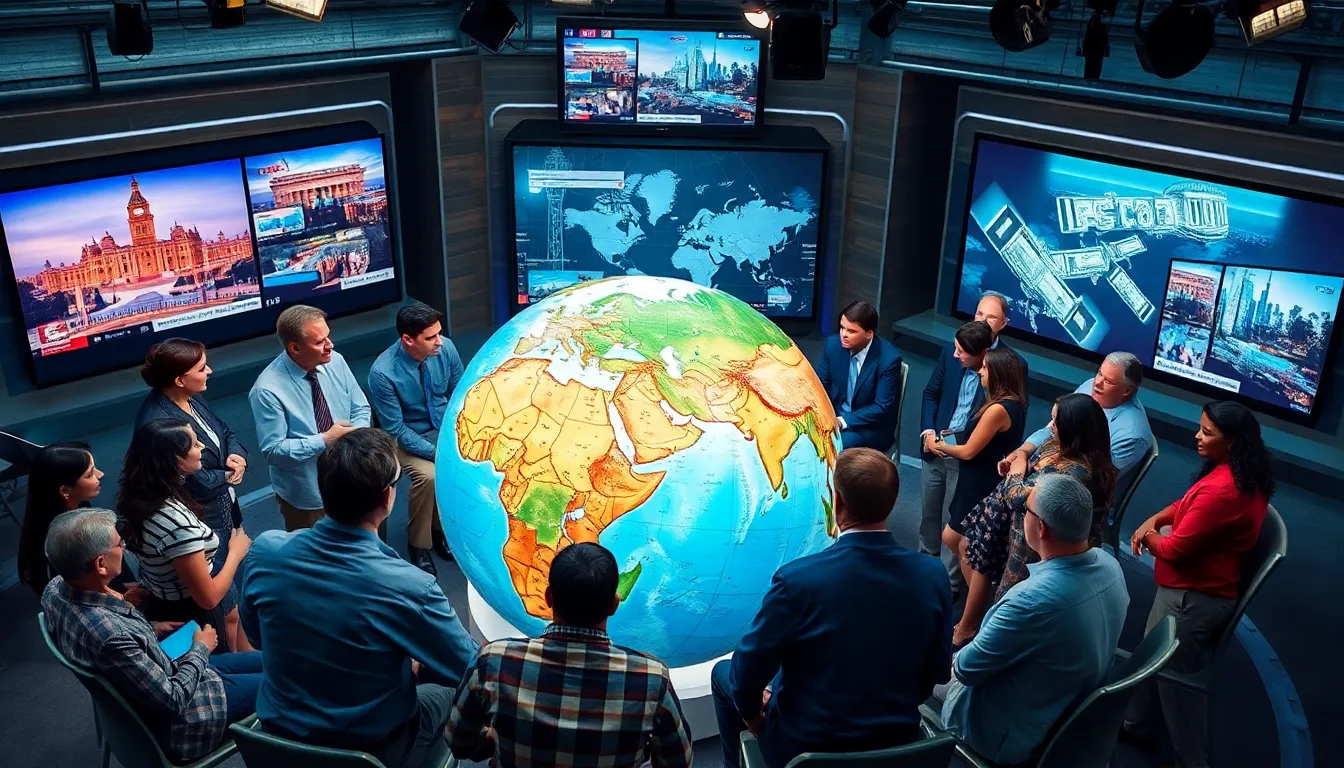
Reliable sources play a crucial role in understanding world affairs. These sources inform citizens about global events, dynamics, and developments.
Traditional Media
Television networks offer extensive coverage of international news. Prominent examples include CNN, BBC, and Al Jazeera. Newspapers like The New York Times and The Guardian also provide in-depth analysis of key issues. Radio stations contribute with broadcasts that discuss global topics and highlight expert opinions. Traditional media remains essential for audiences seeking comprehensive reporting, often featuring expert interviews and editorial perspectives that enrich understanding.
Digital Media
Social media platforms change how people access world affairs coverage. Twitter, Facebook, and Instagram facilitate real-time updates and interactions. News websites and blogs offer instant online reporting, catering to diverse audience preferences. Aggregator sites compile information from multiple sources, making it easier for users to access a variety of perspectives. Digital media enhances engagement through podcasts, videos, and infographics, allowing users to absorb complex information quickly and efficiently.
Challenges In Reporting World Affairs
Reporting world affairs presents unique challenges that impact the accuracy and reliability of information. Journalists often grapple with various obstacles when covering global events.
Political Bias
Political bias significantly influences world affairs coverage. Many media outlets cater to specific political ideologies, which can distort reporting. Data from the Pew Research Center indicates that 60% of Americans believe news organizations favor one side over another. This perception can skew public understanding of important issues. Diverse perspectives in reporting are essential for balanced coverage. Journalists face pressure to align their narratives with the interests of their audience, leading to selective reporting and sensationalism.
Access To Information
Access to information remains a vital barrier in world affairs journalism. In regions experiencing conflict or oppressive regimes, journalists may struggle to obtain accurate data. According to Reporters Without Borders, over 300 journalists faced imprisonment globally in 2021. Restricted access hampers the ability to report on critical developments. Moreover, internet censorship in various countries limits the dissemination of factual information. This lack of transparency impacts the overall quality of coverage, resulting in incomplete narratives that fail to inform the public effectively.
The Role Of Social Media In World Affairs Coverage
Social media plays a crucial part in shaping the narrative around world affairs. Platforms like Twitter, Facebook, and Instagram deliver real-time updates that traditional media often cannot match. These platforms facilitate the rapid spread of information, enabling users to share breaking news from around the globe instantly.
Engagement levels soar on social media as individuals discuss events and share opinions. Users often amplify critical issues, urging international attention on humanitarian crises or political developments. This collective voice can influence mainstream media coverage by highlighting stories that may otherwise remain overlooked.
Access to diverse perspectives is another significant advantage of social media. Individuals connect with voices from various backgrounds, fostering a more inclusive dialogue about global issues. Different viewpoints enrich discussions and help build a multifaceted understanding of complex situations.
Challenges in verifying information arise, however. Misinformation spreads rapidly across social platforms, potentially leading to confusion or misinterpretation of events. Critical thinking and skepticism are essential when navigating the deluge of information.
Moreover, engagement with global issues grows through multimedia content. Videos, infographics, and live streams help users comprehend intricate topics more effectively. Users often benefit from digestible formats, allowing quick absorption of essential information.
In sum, social media has transformed how the public engages with world affairs. Immediate updates, diverse voices, and innovative content formats enhance awareness and understanding. Its role continues to evolve, influencing how citizens participate in discussions and advocacy on a global scale.
Future Trends In World Affairs Coverage
Emerging technologies are set to transform world affairs coverage significantly. Artificial intelligence algorithms will curate news, ensuring that individuals receive personalized content relevant to their interests. News organizations are investing in AI tools to filter vast amounts of information and present the most pertinent updates.
Increased multimedia content will enhance storytelling in world affairs. Visual storytelling through infographics, videos, and interactive maps can engage audiences more effectively. These formats provide context and improve comprehension of complex issues.
Moreover, collaboration between traditional and digital media will shape coverage landscapes. Traditional outlets expanding their online presence will reach broader audiences, while digital platforms maintain the immediacy of real-time updates. This synergy can create a more comprehensive understanding of global events.
Engagement with audiences will also evolve. Media organizations will emphasize community input, allowing individuals to share their perspectives. These interactions can foster dialogue and broaden the discussion surrounding critical international issues.
Furthermore, fact-checking initiatives will gain traction to combat misinformation. Media organizations are recognizing the need to verify sources and ensure accuracy in reporting. Strengthened efforts in this area can build trust and credibility with audiences.
Finally, increased emphasis on diverse voices will change narratives in world affairs. Media outlets are prioritizing representation from various demographics to present a comprehensive view of global issues. Diverse perspectives can enrich discussions and promote a more inclusive understanding of events.
Staying informed about world affairs is essential in today’s interconnected landscape. Engaging with global events not only enhances individual understanding but also promotes empathy and cooperation across cultures. As the media landscape evolves, the responsibility lies with audiences to seek reliable sources and critically evaluate the information they consume.
The future of world affairs coverage promises to be dynamic with advancements in technology and a focus on diverse perspectives. By embracing these changes, individuals can contribute to a more informed and engaged society. Ultimately, awareness of international issues fosters personal growth and encourages meaningful dialogue, reinforcing the importance of global citizenship.