
Understanding measurements is essential in everyday life, and one of the most fundamental units is the meter. As the standard unit of length in the metric system, it plays a crucial role in various fields, from science and engineering to everyday activities like shopping or home improvement. But just how long is one meter, and how does it compare to familiar objects?
To grasp the concept of a meter, it’s helpful to visualize it in relation to things people encounter daily. Whether it’s the height of a door or the length of a guitar, comparing meters to everyday items can make this measurement more relatable. This article will explore the significance of a meter and provide insights into its practical applications, helping readers appreciate this essential unit of measurement.
Understanding The Meter
The meter is the base unit of length in the International System of Units (SI). Defined as the distance light travels in a vacuum during a specific time period, its precise measurement is 1/299,792,458 seconds. This definition emphasizes the meter’s foundation in universal constants, making it crucial in scientific accuracy.
The meter plays a vital role across various disciplines. In engineering, it’s used for ensuring structural integrity. In physics, it’s fundamental for calculating speed, distance, and gravitational forces. Everyday life often involves meters, such as measuring room dimensions or fabric lengths.
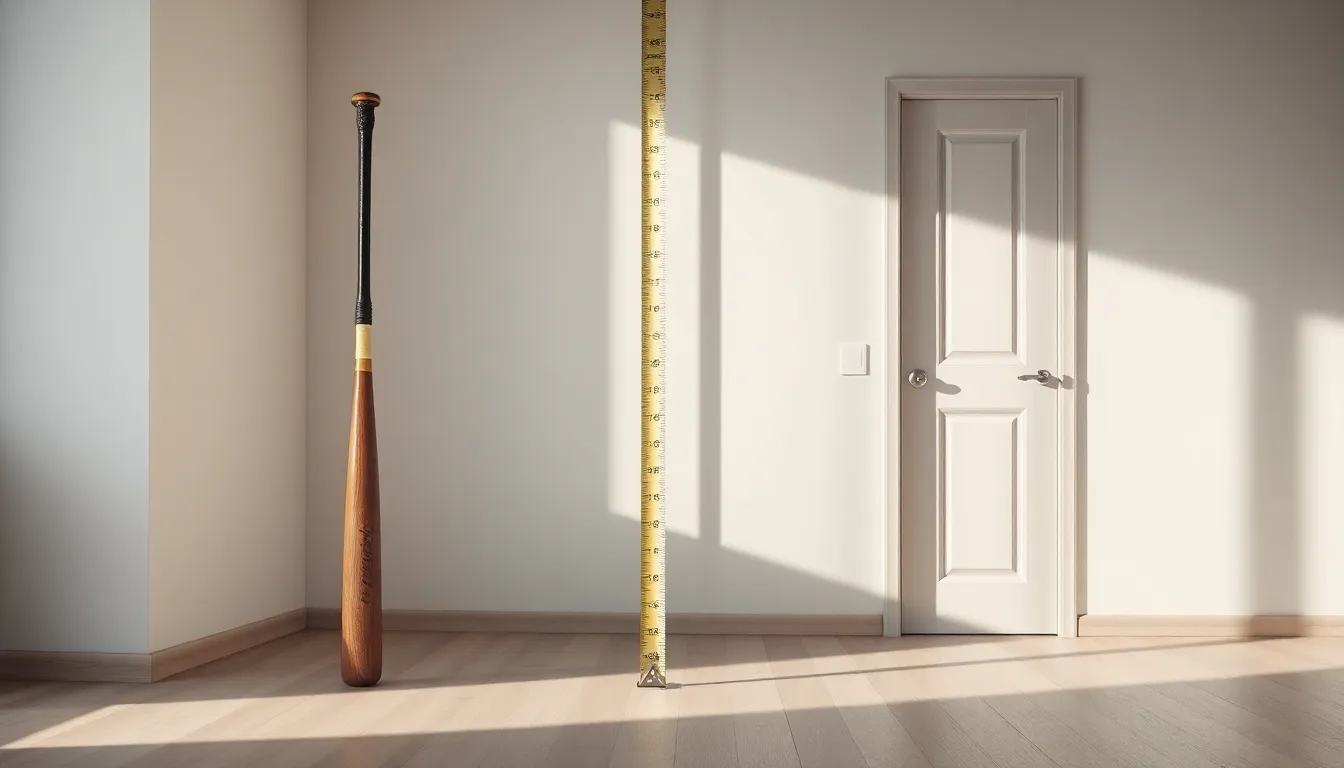
To visualize a meter, consider familiar objects. A standard baseball bat measures approximately 1.06 meters, while a typical door stands about 2 meters tall. These comparisons provide context, making the abstract concept of a meter more tangible.
Understanding the meter enhances comprehension of measurements in both professional and everyday contexts. Its applications across multiple fields highlight its significance in navigating and interpreting the world accurately.
Historical Context
Understanding the historical context of the meter enriches the appreciation of its significance and application. The meter has undergone various transformations in its definition and usage throughout history.
Origins Of The Meter
The meter originated during the French Revolution in 1791 as a part of the metric system aimed at standardizing measurements. French scientists, seeking a universal measurement, defined the meter as one ten-millionth of the distance from the equator to the North Pole along a meridian. This definition provided a natural basis for measurement, aligning it with Earth’s dimensions.
Evolution Of Measurement
The evolution of measurement reflects advancements in science and technology. Initially, measurements relied on physical objects like a yardstick or the length of a king’s foot. In the 19th century, the meter became formally defined based on platinum and iridium artifacts, known as the International Prototype Meter. By 1960, the meter transitioned to being defined by the wavelength of light emitted by a specific atomic transition. In 1983, the definition shifted again, relying on the speed of light in a vacuum, solidifying the meter as a fundamental unit grounded in physics. These changes underscore the meter’s adaptability and relevance across scientific disciplines.
Practical Applications
The meter serves as a fundamental unit in various aspects of life, enabling precise communication in diverse fields. Understanding how long a meter is allows for cohesion in everyday tasks and scientific research.
Everyday Uses
Everyday scenarios frequently employ the meter. People use meters to measure furniture dimensions, ensure proper fit in homes. Clothing sizes often include measurements that reference meters, making shopping easier. Gardeners measure plot sizes in meters to optimize space for plants. Schools use meters to teach students about measurements in math and science courses. Additionally, athletes often gauge distances on tracks and field events in meters, facilitating performance tracking.
Scientific Relevance
In science, the meter holds significant importance. Physicists use meters to express distances in experiments, enabling accurate calculations. Scientists measure wavelengths of light in meters, crucial for understanding electromagnetic radiation. Engineering projects require meter measurements for structural integrity, influencing designs and safety standards. Research in fields like geology utilizes meters to analyze depth and distance, facilitating data collection. Furthermore, the precision of the meter enhances scientific communication, providing a universal standard for shared knowledge across disciplines.
Converting Meters To Other Units
Understanding how to convert meters into other units enhances the practical application of this measurement in various contexts. Below are specific conversion values for commonly used units.
Meters To Feet
Converting meters to feet requires multiplying the meter value by approximately 3.28084. This factor is derived from the definition that one meter equals precisely 3.28084 feet.
| Meters | Feet |
|---|---|
| 1 | 3.28084 |
| 2 | 6.56168 |
| 5 | 16.4042 |
| 10 | 32.8084 |
Meters To Centimeters
Converting meters to centimeters involves multiplying by 100 since there are 100 centimeters in one meter. This clearly indicates that the centimeter is a smaller unit of measure used for more precise dimensions.
| Meters | Centimeters |
|---|---|
| 1 | 100 |
| 2 | 200 |
| 5 | 500 |
| 10 | 1,000 |
Visualizing One Meter
Visualizing one meter can enhance understanding through relatable comparisons. A standard door height measures about 2 meters, making it a useful reference point. Measuring approximately 1.06 meters, a baseball bat also provides a tangible example.
The length of an average bicycle frame spans around 1 meter. A typical kitchen table usually exceeds 1 meter in width. A standard yoga mat measures 1.8 meters long, illustrating the meter’s application in fitness and leisure.
In art, the dimensions of a large canvas often approach 1 meter in height or width, showcasing the meter’s relevance in creative spaces.
Furthermore, various everyday items help emphasize the meter’s significance.
| Object | Approximate Length |
|---|---|
| Standard door height | 2 meters |
| Baseball bat | 1.06 meters |
| Bicycle frame width | 1 meter |
| Kitchen table width | Over 1 meter |
| Yoga mat length | 1.8 meters |
| Large canvas height/width | 1 meter |
These comparisons anchor the abstract measurement of a meter within everyday experiences.
Understanding the meter is essential for grasping measurements in daily life and various professional fields. Its historical significance and evolution from a physical definition to a universal constant underscore its importance in ensuring accuracy and consistency. By visualizing a meter through relatable objects, individuals can better appreciate its relevance.
The practical applications of the meter extend from everyday tasks to complex scientific calculations. Whether measuring furniture or calculating distances in sports, the meter serves as a vital tool. Embracing this fundamental unit not only enhances communication but also fosters a deeper understanding of the world around us.


