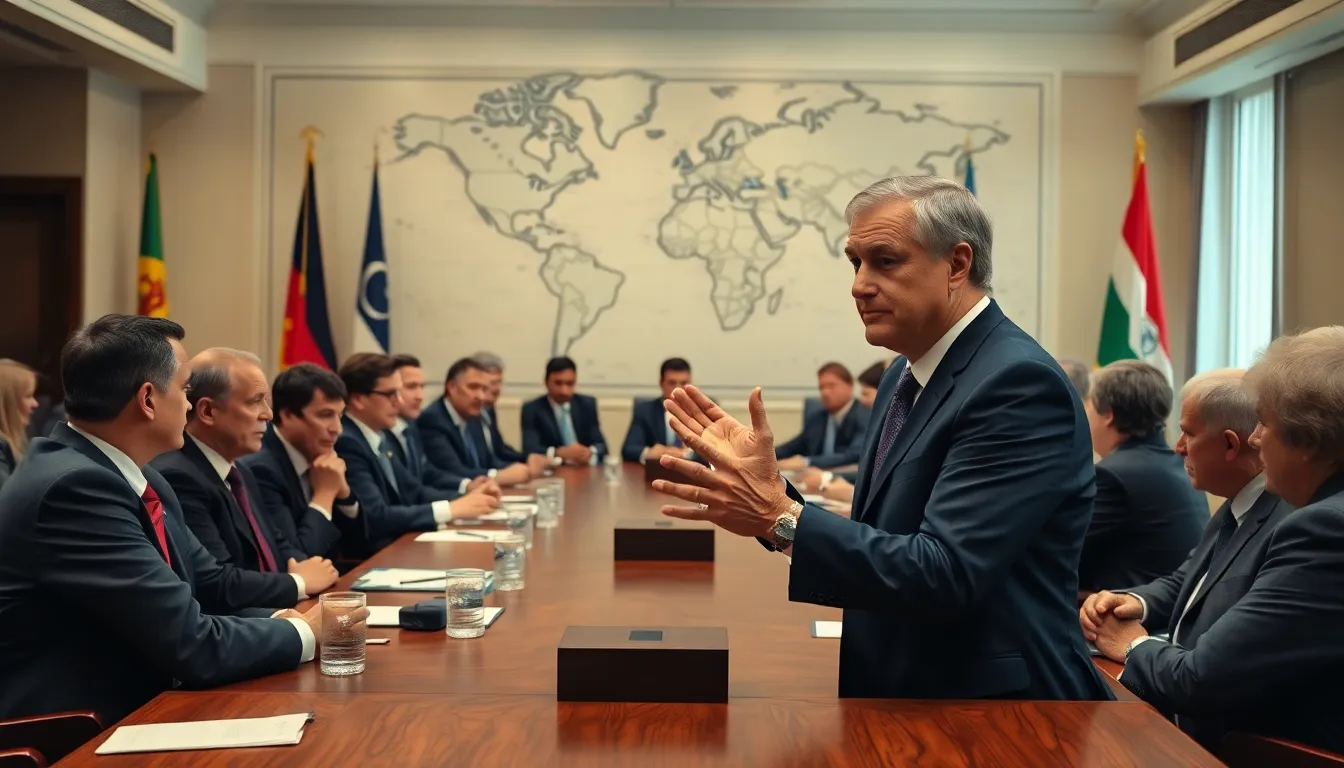
In a world where politics can feel like a soap opera—complete with plot twists, dramatic exits, and the occasional villain—understanding global political relations is more crucial than ever. Nations are like neighbors in a crowded apartment building, occasionally borrowing a cup of sugar but often squabbling over noise complaints. With alliances forming and breaking faster than a celebrity marriage, it’s essential to keep up with the shifting dynamics that shape our lives.
Overview Of World Political Relations
World political relations involve intricate interactions between nations, influenced by historical ties, economic dependencies, and cultural exchanges. Each country’s unique political framework shapes its approach to international diplomacy. Strategically, states pursue their interests through alliances and treaties, often adjusting positions in response to global events.
Rapid shifts in alliances can arise from security concerns or economic incentives. For instance, countries often form strategic partnerships to address common threats or boost trade. Regional organizations, such as the European Union and the African Union, play significant roles in fostering cooperation among member states.
Crisis situations, like conflicts or humanitarian issues, frequently challenge existing political relations. Nations may intervene through diplomatic channels or military support, reflecting changes in foreign policy. The response to international issues, such as climate change or global health crises, illustrates the interconnectedness of world politics.
Trade agreements are another crucial element shaping relations. By engaging in bilateral or multilateral negotiations, countries aim to enhance economic viability and strengthen diplomatic ties. Tariffs, quotas, and trade barriers impact these agreements, affecting global trade dynamics.
Public opinion and media also affect political relations substantially. Governments often respond to citizens’ concerns about international dealings, leading to shifts in policy. The role of social media cannot be overlooked, as it amplifies public discourse around global affairs.
Awareness of these factors is essential for grasping the complex nature of world political relations today. Each interaction has the potential to reshape alliances, reinforce disputes, or foster cooperation in resolving global challenges.
Historical Context

Understanding historical context is vital for grasping world political relations. Significant events and agreements have shaped these dynamics, influencing how nations interact today.
Major Events Shaping Political Relations
World War I marked a pivotal moment in global relations, dismantling empires and sparking new countries. Following this, the Treaty of Versailles in 1919 imposed harsh penalties on Germany, sowing seeds for future conflicts. The Cold War era emerged as a direct consequence, with ideological clashes between the United States and the Soviet Union redefining alliances. Events like the fall of the Berlin Wall in 1989 symbolized the end of this divide. More recently, the 9/11 attacks in 2001 shifted focus toward terrorism, altering international security priorities. Understanding these events highlights how past conflicts and resolutions continue to influence present-day political landscapes.
Key Treaties and Agreements
Treaties and agreements form the backbone of international relations. The Treaty of Westphalia in 1648 established principles of state sovereignty, affecting modern diplomacy. Another significant agreement, the North Atlantic Treaty of 1949, created NATO, solidifying military alliances in the face of Soviet threats. Additionally, the Paris Agreement on climate change in 2015 reflects a collaborative effort and shared responsibility among nations toward environmental goals. Major trade agreements, like NAFTA in 1994, reshaped economic relations between the United States, Canada, and Mexico. Each of these treaties serves as a cornerstone, impacting diplomatic interactions and cooperative efforts across the globe.
Current Global Power Dynamics
Global political relations shift rapidly, influenced by superpowers and emerging nations. Understanding these dynamics requires analyzing current trends and initiatives.
Superpowers and Emerging Nations
Superpowers maintain significant influence in international affairs. The United States and China lead this category, showcasing military strength and economic prowess. They shape global policies and drive discussions on trade, climate change, and security. Emerging nations, such as India and Brazil, are increasingly asserting their positions. Economic growth in these nations attracts foreign investment and attention at multinational forums. Collaborative agreements among these countries enhance their negotiating power. Their unique challenges also shape individual approaches to diplomacy. Thus, the interplay between superpowers and emerging nations is crucial for understanding contemporary global power structures.
Influence of International Organizations
International organizations play vital roles in mediating disputes and fostering cooperation. The United Nations stands as a key player, addressing conflicts and promoting peacekeeping efforts. Various regional organizations, including the European Union and the African Union, further enhance political dynamics through collective decision-making. They facilitate trade agreements, establish regulations, and promote sustainable development. Effectively, these organizations provide platforms for member states to address critical global issues collaboratively. Their influence often extends beyond politics to areas such as health, human rights, and environmental protection. Recognizing their impact is essential for comprehending the nuances of global political relations.
Regional Political Relationships
Regional political relationships shape the global landscape significantly, influencing alliances and conflicts among nations.
North America
The dynamics in North America center around the United States, Canada, and Mexico. Trade agreements, particularly the United States-Mexico-Canada Agreement, facilitate economic collaboration. Political cooperation emerges through shared security interests, especially regarding migration and border control. Canada often aligns with U.S. policies, while Mexico navigates its unique challenges, maintaining strong ties within the region.
Europe
European nations engage in intricate political relationships, heavily influenced by the European Union’s framework. The EU fosters economic integration, promoting free trade and movement among member states. While tensions arise, especially concerning migration and national sovereignty, collective security remains central through NATO. Common concerns about climate change and economic stability unify countries, encouraging collaborative policies.
Asia-Pacific
In the Asia-Pacific, regional dynamics are characterized by competition and cooperation. China emerges as a significant power, influencing neighboring nations through economic initiatives like the Belt and Road Initiative. Security concerns, particularly regarding North Korea, drive alliances such as those between the U.S., Japan, and South Korea. The Association of Southeast Asian Nations also plays a pivotal role in facilitating dialogue and enhancing regional stability.
Middle East
Conflicts and alliances define political relationships in the Middle East. Historical rivalries, coupled with religious and ethnic divides, complicate interactions between states. Diplomatic efforts often focus on peace processes, such as those between Israel and neighboring Arab nations. Moreover, countries like Saudi Arabia and Iran jockey for influence, affecting regional stability through their proxy engagements.
Africa and Latin America
In Africa, nations collaborate through organizations like the African Union, addressing issues such as security and economic development. Regional conflicts often prompt unity among states. Latin America faces its challenges but emphasizes regional agreements like Mercosur to enhance trade and political cooperation. Countries on both continents prioritize shared objectives, driving efforts toward growth and stability.
Challenges in World Political Relations
World political relations face numerous challenges that impact global stability and cooperation. Understanding these challenges helps in navigating the complex landscape of international politics.
Conflict and Stability Issues
Conflict remains a persistent challenge in global politics. Nations often find themselves at odds due to historical grievances, territorial disputes, or competition for resources. New conflicts in regions like Ukraine and the Middle East disturb existing political relations and lead to instability. Additionally, regional power dynamics contribute to escalating tensions as nations seek to assert dominance or influence. Solutions require diplomatic engagement and an emphasis on conflict resolution mechanisms to foster lasting peace.
Economic Sanctions and Trade Wars
Economic sanctions and trade wars present significant hurdles in the realm of political relations. Disputes between major economies, such as the United States and China, lead to tariffs that disrupt global trade patterns. These actions impact not only the countries involved but also third nations dependent on stable trade flows. Effectiveness of sanctions often remains contested, as they can harm civilian populations while failing to achieve political objectives. Trade negotiations must prioritize cooperative frameworks that benefit all parties to mitigate tensions and encourage economic collaboration.
Climate Change and Global Cooperation
Climate change represents an urgent challenge that demands global cooperation. Nations increasingly recognize that environmental issues transcend borders, affecting security, migration patterns, and economic stability. Collaborative efforts like the Paris Agreement aim to unite countries in addressing climate change but often struggle with political will and differing priorities. Commitment to shared goals is essential for meaningful progress, necessitating strong international partnerships to tackle environmental challenges effectively.
Navigating the intricate web of world political relations requires a keen understanding of historical context and current dynamics. As nations adapt to shifting alliances and emerging challenges, their interactions shape the global landscape in profound ways.
The interplay of trade agreements, public opinion, and international cooperation highlights the importance of staying informed. Each political maneuver can lead to significant consequences, whether fostering collaboration or escalating tensions.
In this ever-evolving arena, awareness of these complexities is crucial for engaging with the world effectively. By grasping the nuances of global political relations, individuals and policymakers alike can contribute to a more informed and responsive international community.